Control Room & Mission Critical Spaces: Planning Technology Upgrades in Live Operational Environments
Control rooms play an important role in transport networks, utilities, security operations, emergency response and other environments where teams rely on continuous access to operational information.
Upgrading these facilities can involve considerable coordination, particularly when existing systems need to remain available throughout the project.
Organisations may be replacing ageing display infrastructure, expanding operator capacity, introducing additional information sources or consolidating several operational functions into one location.
These projects require careful planning across system integration, operational continuity, ergonomics and the physical environment. Display technology, workstation design and information management all influence how effectively operators can perform their roles.
For government agencies and enterprise organisations, early planning helps establish how an upgraded control room will meet current operational requirements while accommodating future needs.
Understanding the requirements of the operations team
Control room technology should reflect the activities taking place in the facility.
An operations centre responsible for transport monitoring may need to display traffic information, incident reports, live video feeds and network data. A utility operations centre may depend on several monitoring platforms, while a security control room may need to manage surveillance feeds and communication systems.
These requirements influence the type of displays, workstations, control interfaces and information-sharing capabilities needed.
Consultation with operators, supervisors and technical teams is an important part of defining the project. It helps establish which information must remain visible, how operators move between systems and how teams coordinate during routine operations or major incidents.
Operational workshops can also help identify existing limitations, preferred workflows and opportunities to improve the way information is accessed and shared.
Ergonomics and human factors in control room design
Operators in mission-critical environments may spend extended periods monitoring multiple information sources, responding to incidents and coordinating with colleagues.
The physical arrangement of the control room has a direct influence on how comfortably and effectively these activities can be performed.
Workstation ergonomics should consider monitor positioning, viewing distances, desk height, seating, equipment reach and the number of screens required for each role.
Where appropriate, adjustable workstations can accommodate different operators and changes in working posture throughout a shift. Console layouts should also provide sufficient space for communication devices, keyboards and other equipment used regularly.
Sightlines are particularly important. Operators may need to move their attention between individual workstation displays and a large shared video wall. Poor display positioning can require repeated head movement or make detailed information difficult to read.
Lighting and acoustics also affect the operating environment. Reflections and glare can interfere with screen visibility, while background noise may affect communication during operational incidents.
These considerations are particularly relevant in facilities operating around the clock, where visual comfort, concentration and sustained system use are important.
The international ISO 11064 series provides guidance on the ergonomic design of control centres, including workstation dimensions, layout and environmental conditions.
Considering human factors alongside technology selection helps ensure the room is designed around the people operating it.
Display technology and information visibility
Large display walls are common in modern control rooms, providing shared visibility of operational information across the facility.
However, display size and resolution are only part of the technical requirements.
A control room may need to present CCTV feeds, operational dashboards, mapping applications, communication systems and other information sources simultaneously.
The way these sources are processed, routed and arranged influences how operators interpret and interact with the information.
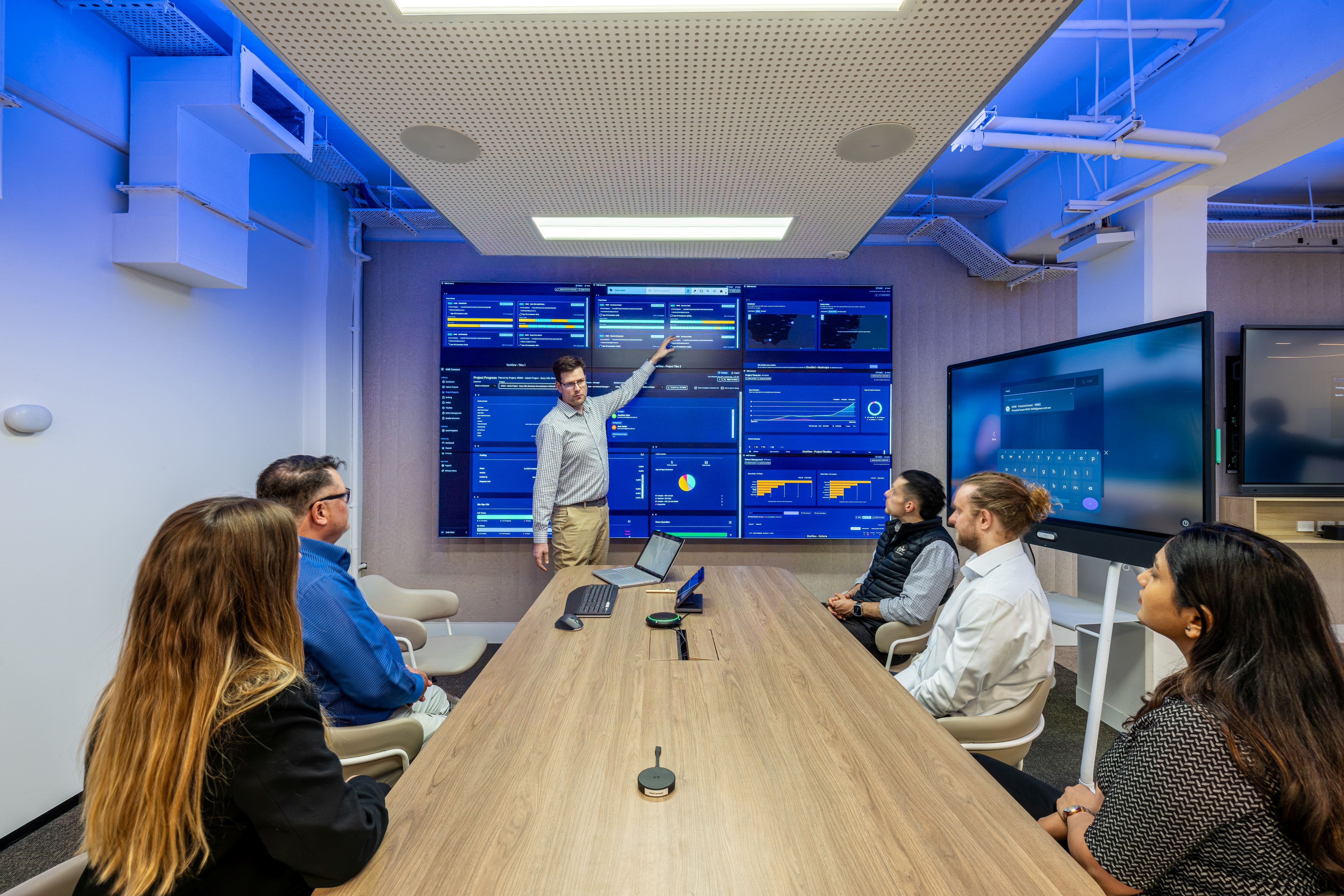
Video wall processing systems can allow multiple inputs to be displayed in different layouts, supporting routine monitoring, incident response or management briefings.
Depending on operational requirements, these layouts may be configured as predefined viewing modes, allowing operators to change the information presented without manually rearranging individual sources.
Technical planning should consider source resolution, image scaling, processing latency, signal compatibility and the number of inputs and outputs required.
For network-connected systems, bandwidth, security and integration with existing IT infrastructure also need to be reviewed.
The objective is to provide clear access to relevant information while maintaining an interface that operators can use confidently during normal and high-pressure situations.
Integrating multiple systems into one operating environment
Many control rooms rely on technology supplied by different manufacturers and managed by different teams.
These may include security systems, monitoring applications, communications platforms, video management systems and operational databases.
Modernisation projects often involve integrating these existing systems with new displays, control interfaces and signal distribution technology.
Depending on the environment, KVM (keyboard, video and mouse) technology may also allow operators to access and control multiple computer systems from a workstation without requiring separate keyboards, monitors and mice for every source.
Video-over-IP and other signal distribution technologies can provide flexible access to information across operator positions, shared displays and adjacent operational spaces.
The appropriate architecture depends on the organisation's existing infrastructure, cybersecurity requirements, operational workflows and expected system availability.
Compatibility and access requirements should be confirmed during design, particularly where existing systems will remain in use after the upgrade.
System resilience and operational continuity
Reliability is an important consideration for control rooms supporting continuous operations.
A system interruption may affect access to operational information or the ability of teams to coordinate effectively.
For this reason, technology selection should consider the availability requirements of the facility and how critical functions will be maintained.
Depending on the operational risk assessment, this may include redundant components, alternative signal paths, equipment monitoring and defined recovery procedures.
The system design should also consider how maintenance and software updates can be completed, particularly where access to equipment is restricted during operational hours.
For facilities operating 24/7, ongoing technical support, preventative maintenance and clear escalation arrangements form an important part of the planning process.
The appropriate level of resilience will depend on the criticality of the environment and the consequences of losing access to particular systems.
Modernisation while operations continue
A control room upgrade may involve several interconnected systems and delivery teams.
In addition to audiovisual equipment, the project may affect network infrastructure, operator workstations, control platforms, cabling, building services and communications technology.
Where the facility must remain operational, project planning needs to account for access restrictions, transition arrangements and the availability of existing systems.
Some upgrades may be completed in stages, while others require carefully scheduled changeover periods or temporary operational arrangements.
Commissioning and testing should cover the functionality required by operators, including source selection, display layouts, control interfaces and recovery procedures where applicable.
Operator familiarisation and support arrangements should also be included in the programme before the upgraded environment enters regular use.
Preparing for future operational requirements
Control room modernisation provides an opportunity to review the facility's capacity and future technology needs.
Organisations may need to accommodate additional operators, new information sources or changes to operational responsibilities.
The ability to expand display systems, add inputs, integrate new applications and maintain consistent operating procedures can influence long-term planning.
For organisations consolidating previously separate facilities, technology integration can also improve access to shared information and support coordination between teams.
An upgrade programme should consider these requirements alongside the expected operating life of the technology and the resources needed for ongoing support.
Experience from Australian control room projects
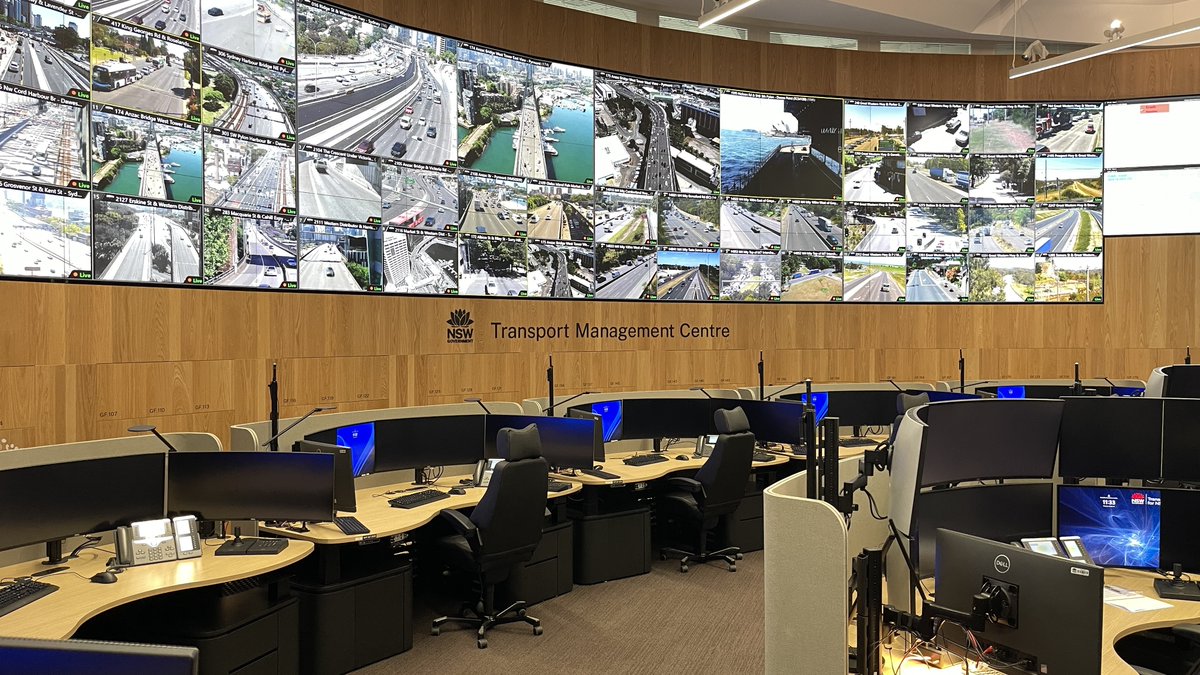
The Transport for NSW Transport Management Centre modernisation demonstrates the scale of specialist operational technology projects.
The upgraded facility includes a 23-metre digital display wall supporting live CCTV feeds, network information and situational awareness. The wider modernisation programme also increased workspace capacity in the main operations room by 55%, with improvements to lighting and ergonomics supporting the operational environment.
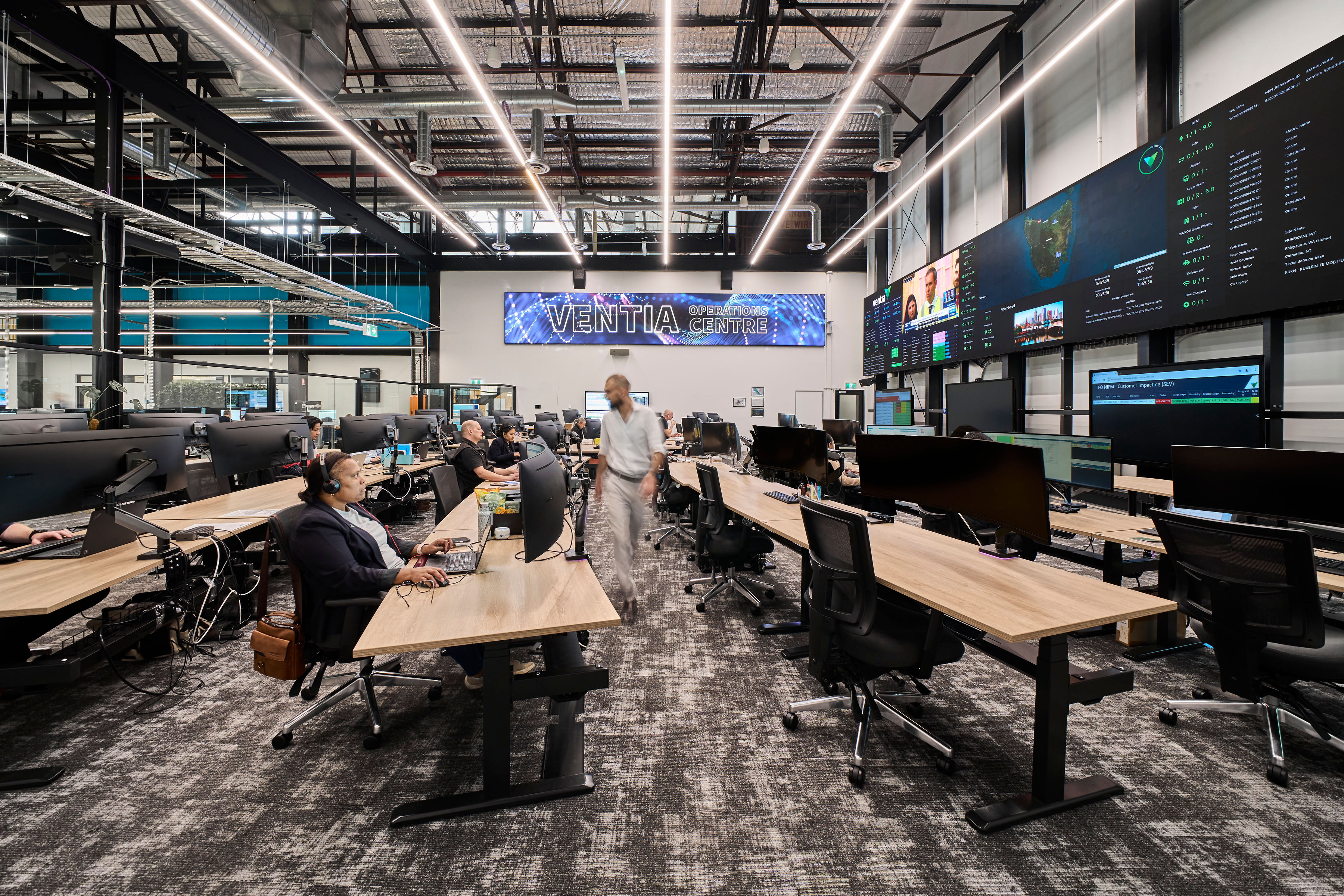
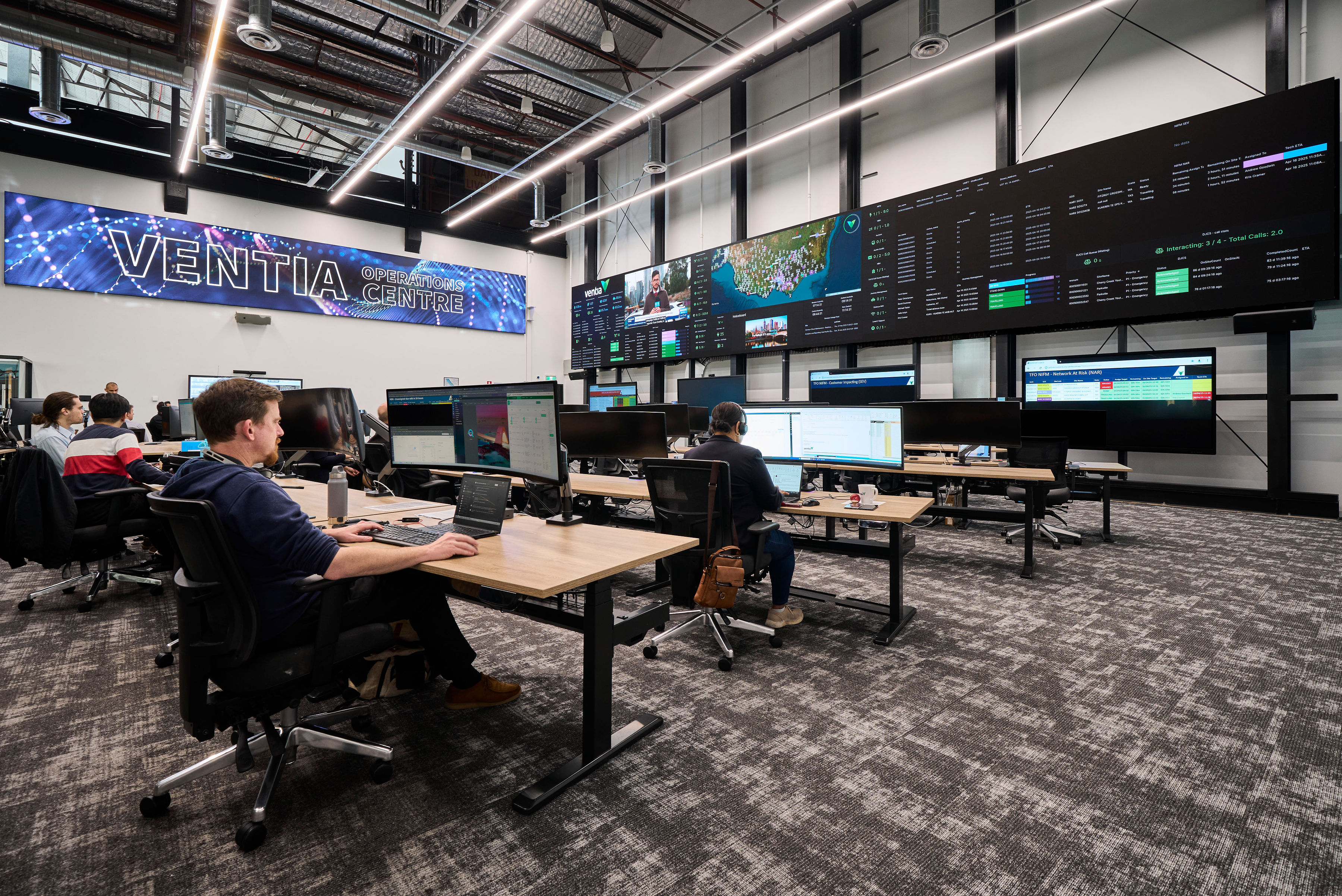
Another example is the Ventia Operations Centre in Melbourne, which brought several previously separate control room functions into a purpose-built operations environment. The facility includes a 16-metre DiColor LED wall, a video processing system supporting up to 60 source inputs and 24 outputs, and custom control interfaces with predefined layouts for different operational requirements. The technology was developed through consultation with Ventia's operations and ICT teams, including operator workshops, interface planning and iterative testing. The project also includes an AVCare support arrangement covering ongoing system maintenance, technical assistance and system improvements.
Both projects demonstrate how specialist audiovisual integration, operator requirements and ongoing support contribute to the performance of a mission-critical facility.
Planning your control room upgrade
Pro AV Solutions works with organisations across Australia on control rooms, operational centres and mission-critical environments.
Our experience includes complex display systems, signal distribution, control interfaces, technology integration, project delivery and ongoing support for facilities with demanding operational requirements.
For organisations considering an upgrade or new operations facility, our team can assist with reviewing operational workflows, ergonomics, technical requirements and integration considerations before major design decisions are made.
An initial discussion with our Customer Solutions team can help establish the project scope, understand existing infrastructure and identify the technical and operational requirements that should inform the design.
Frequently asked questions
What should organisations consider when upgrading a control room?
Key considerations include operational workflows, display technology, ergonomic workstation design, system integration, information visibility, existing infrastructure, operational continuity, future capacity and ongoing support.
Why is ergonomics important in control room design?
Operators may spend extended periods monitoring multiple information sources. Workstation layout, display positioning, viewing distances, lighting, acoustics and adjustability can influence comfort, concentration and the ability to access information effectively.
What technology is commonly used in control room environments?
Control rooms may use large-format LED or LCD display walls, video wall processors, signal distribution systems, KVM technology, operator workstations, control interfaces and integrated communication platforms. The solution depends on operational requirements.
How do video wall processors support control room operations?
Video wall processors can manage and arrange multiple information sources across large displays. Depending on the system, operators may be able to select sources, change layouts and use predefined viewing modes suited to different operating conditions.
Can a control room be upgraded while remaining operational?
Some upgrades can be planned around ongoing operations. The approach depends on the systems involved, operational risk, access requirements and the availability of temporary or staged arrangements.
Why is specialist AV integration important in mission-critical environments?
Control rooms frequently combine several information sources, display systems and communication platforms. Specialist AV integration helps coordinate these technologies and align their operation with the requirements of the facility.